
During the 2026 World Cup, tournament networks moved a staggering 13 million gigabytes of data across the globe, and every megabyte of it had to reach fans through Single Page Applications built for speed. That scale is exactly why optimizing SPAs for real-time data has become the defining technical challenge of the year, and the bracket dashboards built for this tournament are the clearest case study we’ve seen yet.

Key Takeaways
- Real-time SPAs need a different crawl strategy. Bracket updates that refresh every 30 seconds require server-side rendering or dynamic rendering fallbacks so crawlers actually see the live content.
- Dynamic content indexing isn’t automatic. Google needs clear signals (structured data, sitemaps, timestamps) to know your bracket data just changed.
- Web analytics reveal the real user journey. Our digital web analytics services show exactly where fans drop off during live score refreshes.
- A SPA SEO technical audit should happen before major traffic events, not after rankings drop.
- AI SEO and LLM visibility now matter as much as classic search. Answer engines pull from structured, well-tagged data first.
- Data analysis powers the predictions fans crave. Backend simulation work (like the 25,000 simulations behind bracket probability models) needs to surface cleanly on the front end.
- Partnership beats one-off fixes. A seo consulting relationship built around your growth journey catches problems before they cost you visibility.
What Makes SPAs Different When Real-Time Data Enters the Picture
A standard Single Page Application already asks a lot of crawlers. Content loads via JavaScript, routes change without a full page reload, and metadata often stays static while the visible content shifts underneath it.
Now add real-time data. A World Cup bracket 2026 dashboard doesn’t just load once and sit still. It updates scores, standings, and win probabilities constantly, sometimes every few seconds during a knockout match.
That combination, an SPA framework layered with a live data feed, creates a technical environment where traditional optimization approaches simply fall short. We built our approach around this exact problem, blending SEO fundamentals with the kind of data science rigor that live sports platforms demand.
Optimizing SPAs for Real-Time Data: Why the 2026 World Cup Brackets Are the Perfect Case Study
We picked the FIFA World Cup brackets for this piece because nothing tests a real-time SPA quite like a global tournament. Fans across dozens of time zones hit refresh at once, all expecting instant, accurate data.
The 2026 tournament generated over one billion cyber threats against its digital infrastructure, according to FIFA. That number alone tells you these platforms aren’t casual builds. They’re high-stakes systems where performance, security, and visibility all have to work together.
Optimizing SPAs for real-time data at this scale means treating every second of latency as a visibility risk, not just a user experience annoyance. Slow, unindexed content doesn’t just frustrate fans. It gets buried.

Running a SPA SEO Technical Audit Before Kickoff
We always tell clients the same thing: don’t wait for a traffic spike to find out your rendering strategy is broken. A proper SPA SEO technical audit before a major event catches the gaps early.
Here’s what we check every time:
- Whether crawlers receive fully rendered HTML or an empty shell
- How routing changes affect canonical tags and metadata
- Whether lazy-loaded bracket data ever actually reaches the index
- Core Web Vitals under real traffic load, not just lab conditions
- Structured data accuracy for live scores and match status
Our SEO consulting team runs these audits the same way we’d want them run on our own dashboards: methodically, with no shortcuts.
Dynamic Content Indexing: Getting Google to See Your Live Bracket Updates
Dynamic content indexing is where most real-time SPAs quietly lose visibility. The content updates fine for the human eye. It just never gets recrawled fast enough to matter.
Google still commands over 90% of the global search engine market share, so optimizing SPA rendering specifically for its crawlers isn’t optional. It’s the baseline.
The fixes we lean on most:
- Server-side rendering (SSR) for the initial HTML payload, so crawlers see real content immediately.
- Dynamic rendering fallbacks for particularly JavaScript-heavy bracket widgets.
- Timestamped sitemaps that signal exactly when bracket data last changed.
- Structured data (SportsEvent schema) so live match status appears clearly to both search and answer engines.

FIFA World Cup Brackets and the Traffic Surge Behind World Cup Bracket 2026
FIFA reported 20 billion video views across the tournament, alongside 99.7% stadium occupancy during peak matches. Digital demand mirrored physical demand almost exactly.
Any site tracking fifa world cup brackets during that window had to handle both the crowd and the click. That’s a media-heavy, real-time load most SPAs were never architected for.
We watched teams scramble mid-tournament to compress images, defer non-critical scripts, and cache bracket states more aggressively. The lesson is simple: build for peak load before the peak arrives, not during it.

Web Analytics for Real-Time Applications: Measuring What Matters
You can’t optimize what you can’t measure. That’s the whole premise behind our seo & analytics services, and it applies double to real-time SPAs.
Standard pageview tracking misses most of the story on a bracket dashboard. Users don’t navigate to a new page when a score updates; they stay put and watch the DOM change around them.
We build custom event tracking around:
- Real-time widget interaction (clicks, expands, live filters)
- Time-on-view for individual bracket states
- Drop-off moments during high-latency refresh cycles
- Conversion paths from live score views to ticket or merchandise pages
Looker Studio dashboards turn that raw event data into something your whole team can actually act on, week over week, match over match.
Data Analysis Techniques Behind Instant Bracket Predictions
Behind every “78% chance to advance” badge on a bracket screen sits serious computational work. Opta’s supercomputer reportedly ran 25,000 simulations to generate 2026 bracket probabilities, and that same principle scales down to any real-time prediction feature.
Our data analysis work follows a similar path: descriptive stats to understand what happened, predictive models to estimate what’s next, and clean visualization so the numbers actually mean something to the person reading them.
The technical trick isn’t just running the simulations. It’s surfacing that output on the front end fast enough that it still feels “live” by the time a fan sees it.
Where AI SEO and LLM Visibility Fit Into Real-Time SPA Strategy
Search behavior has shifted. People ask ChatGPT or Perplexity “who’s likely to win the World Cup bracket” just as often as they Google it.
That means ai seo isn’t a side project anymore, it’s baked into how we structure content from the start. LLM tools pull answers from clearly labeled, well-structured data, which is exactly why schema markup and clean data hierarchies matter more than ever for real-time SPAs.
Our approach leans on the same martech stack principles we use everywhere else: pair the technical SEO groundwork with data science so both traditional search and ai-driven answer engines can find and trust your live content.

Our 3-Step Roadmap for Optimizing SPAs for Real-Time Data
We don’t believe in one-off fixes. Every client relationship starts with an honest conversation about your needs and where your SPA is falling short today.
- Audit and diagnose. We run a full SPA SEO technical audit covering rendering, indexing, and Core Web Vitals under real load.
- Build the tailored plan. With your personalized roadmap in hand, we map out SSR, structured data, and analytics tracking specific to your real-time features.
- Implement with a collaborative spirit. Our team of passionate people puts their heads together with yours to launch, monitor, and refine as live traffic tells us more.
This is the same commitment we bring to every partnership. You can read more about how that philosophy came together on our our story page.
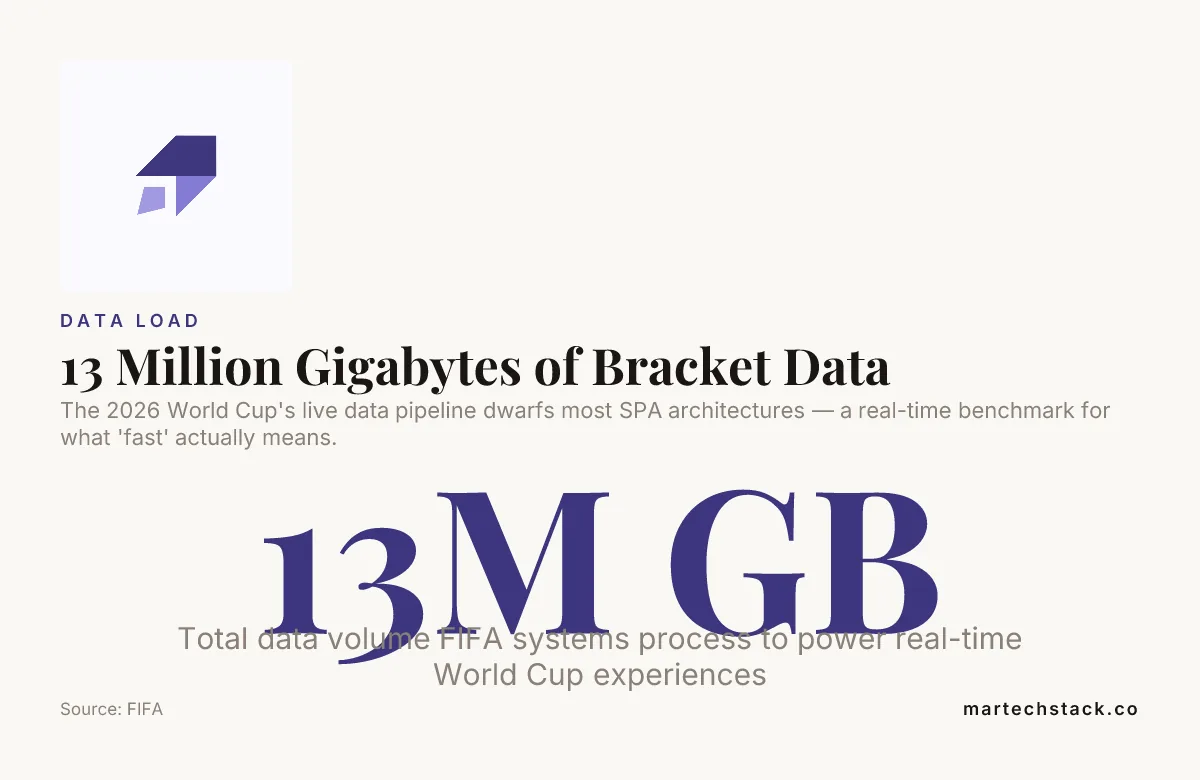
The 2026 World Cup’s live data pipeline dwarfs most SPA architectures, a real-time benchmark for what ‘fast’ actually means.
“With every click, line of code, and insight, we desire to create meaningful work that speaks directly to your needs.” That’s the standard we hold every real-time SPA project to, World Cup bracket or not.
Conclusion
Optimizing SPAs for real-time data isn’t a niche technical concern anymore. It’s the difference between a bracket dashboard that fans trust and one that quietly disappears from search results the moment traffic peaks.
The 2026 World Cup brackets gave us a real-world stress test at a scale most sites will never see, but the lessons translate directly to any live dashboard, ticketing platform, or data-driven app you’re running. We’re more than consultants on this. We’re partners invested in your triumph, and we’d love to start with an honest conversation about your SPA and analytics needs.
Frequently Asked Questions
What is the biggest SEO challenge for SPAs with real-time data?
The core challenge in optimizing SPAs for real-time data is making sure crawlers see updated content fast enough to matter. Without server-side rendering or dynamic rendering fallbacks, live bracket scores and probabilities can update visually while search engines still see stale or empty content.
Do World Cup bracket websites need different technical SEO than regular sites?
Yes. Fifa world cup brackets and similar live-score platforms need structured data for match status, timestamped sitemaps, and infrastructure built for sudden traffic surges, on top of standard technical SEO basics.
How often should a SPA SEO technical audit happen?
We recommend a SPA SEO technical audit before any major traffic event, plus quarterly check-ins for ongoing real-time platforms. Waiting until after a ranking or traffic drop costs more time and visibility than catching issues early.
What is dynamic content indexing and why does it matter for bracket dashboards?
Dynamic content indexing refers to how search engines detect and recrawl content that changes frequently, like live score updates. Without clear signals such as structured data and updated timestamps, search engines may never index the freshest version of a world cup bracket 2026 dashboard.
Can AI and LLM tools actually read real-time SPA data?
AI seo and llm-based answer engines rely heavily on structured, well-labeled data to pull accurate real-time answers. If your SPA lacks clean schema markup, these tools may serve outdated or incorrect information to users asking about live brackets or scores.
Is investing in web analytics worth it for a real-time sports platform?
Absolutely. Web analytics tailored to real-time SPAs reveal exactly where fans drop off during live refreshes, information you simply can’t get from standard pageview tracking alone.
How does data analysis improve real-time bracket predictions?
Data analysis powers the simulations and statistical models behind win-probability displays, similar to the 25,000 simulations run for 2026 tournament predictions. The technical work of surfacing that data instantly on the front end is what makes optimizing SPAs for real-time data so demanding, and so valuable when done right.

Founder of MarTech Stack. SEO, analytics and marketing automation.
LinkedIn